

More Than a Coach: How Trusted Adults Support Young People Through Football
For numerous young people across London, the most influential person in their life isn’t always a parent or teacher. It might be a coach, youth worker, or mentor: someone who consistently shows up, listens, and understands them.
In football, these types of relationships can blossom naturally. What starts as turning up to training each week can develop into something much more significant.
We see how crucial these relationships are first-hand: football is what initially brings the young person through our doors, but it is the trusted relationships built around it that can support them far beyond the pitch.
WHO IS A TRUSTED ADULT?

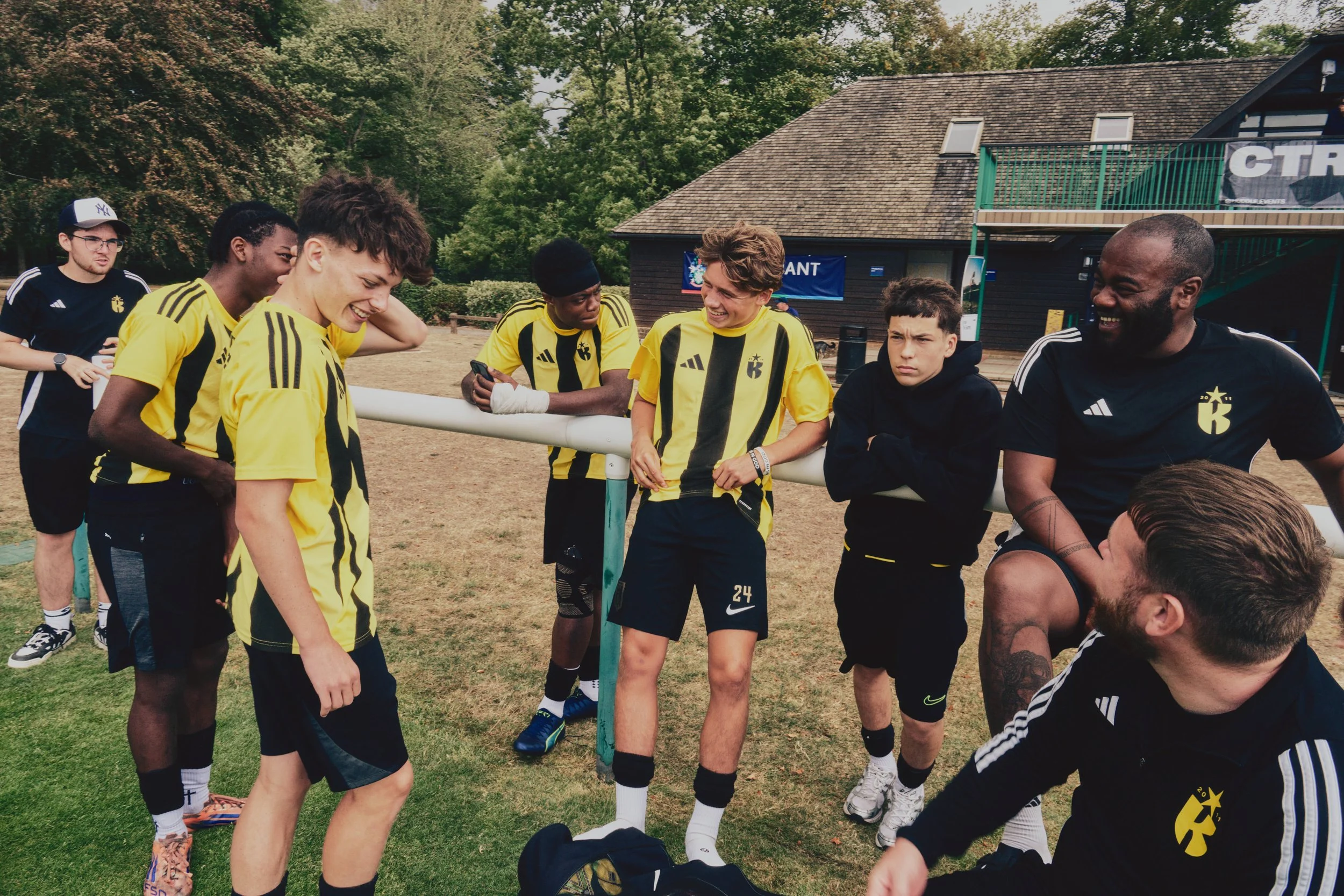
The Government’s National Youth Strategy (NYS) defines a trusted adult as a safe, respectful adult that is chosen by a young person as a trusted figure that listens to and supports them. In our case, an example of a trusted adult would be our School Liaison Officers (SLOs) or any other coach/member of staff/positive role model.
A trusted adult and young person relationship isn’t formed instantly; they decide who they trust. Simply being their coach or teacher does not automatically make someone a trusted adult. This is why the word “chosen” from the NYS definition is so important. Trust is developed through time, respect and consistency.
It takes actually getting to know the young person and their needs to figure out what the best way is to support them. For every young person, what they require from a trusted adult will be different, so there must be a unique approach for every individual.
At Kinetic, our School Liaison Officers (SLOs) can become one of these trusted figures, creating and building a relationship with young people that extends far beyond their time on the football pitch.
WHY DO TRUSTED RELATIONSHIPS MATTER FOR YOUNG PEOPLE?
For young people, having someone that they can rely on can influence much more than what happens during a football training session.
Government research suggests around 1 in 5 13 -17-year-olds in England and Wales don’t have a trusted adult outside of their family. This makes the relationships that young people develop in schools, youth organisations and sports settings particularly important.
The Centre for Education and Youth (CfEY) with Safer London have looked specifically at trusted relationships between young Londoners and the professionals that support them. This research highlighted the importance of reliability and genuineness. For a young person, knowing that someone will continue to listen and take you seriously will make it easier to open up when something isn’t going right in their lives.

This provides a powerful insight into what a trusted relationship can mean for a young person.
WHY, AND HOW DOES FOOTBALL CREATE A UNIQUE OPPORTUNITY TO BUILD THESE RELATIONSHIPS?
Football gives young people something to come back to, a routine that supports their aspirations whilst building relationships with their peers and beyond.
A training session isn’t designed to feel like an intervention. Players arrive because they want to play football, improve, compete and spend time with their teammates and coaches. This regular contact presents an opportunity for relationships to naturally form.
A coach may notice when someone’s behaviour changes. Their on field actions may reveal something that is occurring beyond the pitch. A conversation before training could uncover that a young person is struggling with their studies. That young person might feel more comfortable asking for advice and confiding in someone they know has previously supported them on the pitch to now help them off the pitch.
This is part of what makes sport, and especially football, such a significant engagement tool – for us, football is about much more than what happens during the 90 minutes on the pitch.
MORE THAN A COACH: THE ROLE OF OUR SLOS
At the heart of the Kinetic Academy programme are our School Liaison Officers (SLOs).
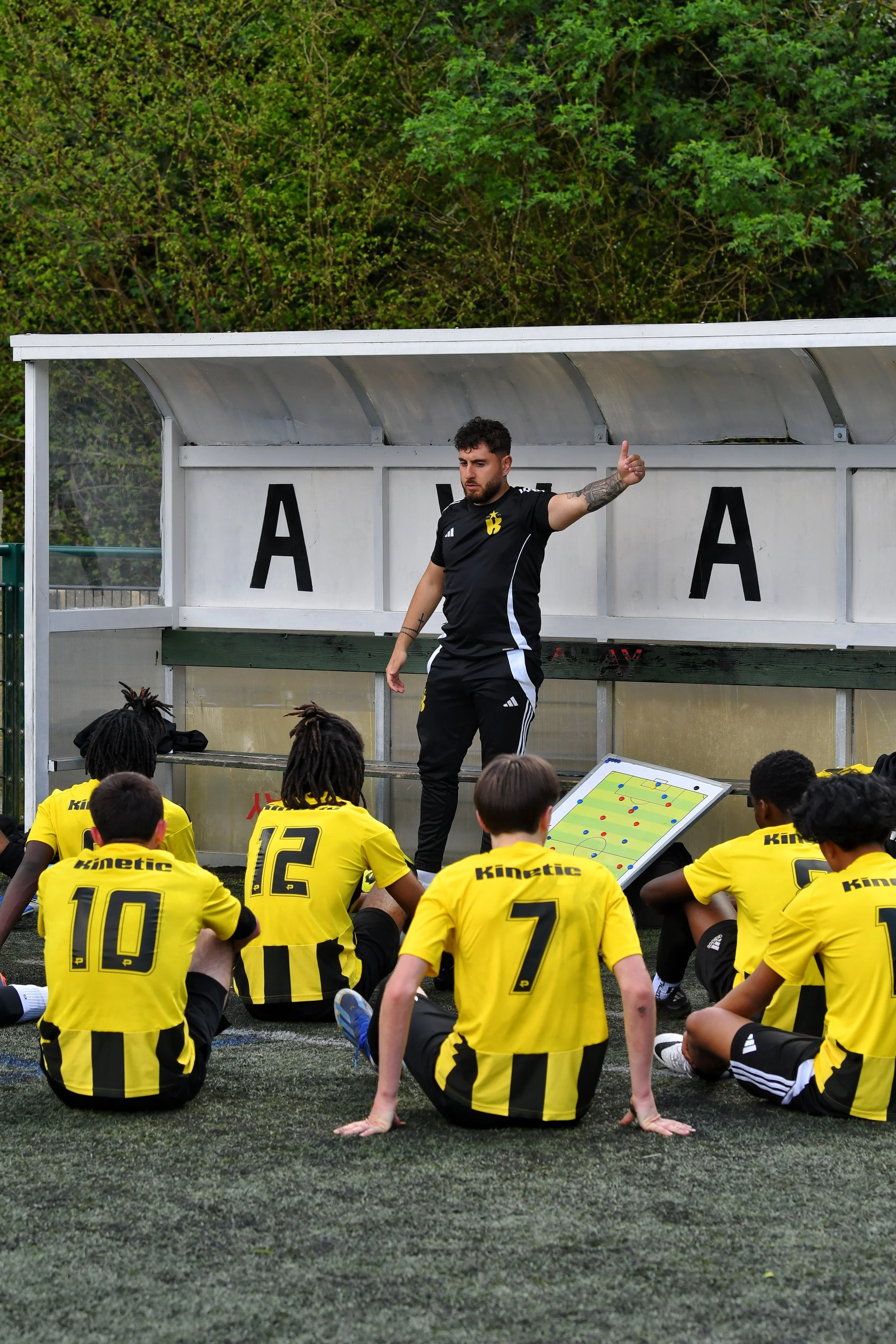
Every school we work with has a dedicated SLO, who is based on site with our young people throughout the day. This gives them an understanding of the whole young person, not simply how they perform at training or a match.
SLOs act as a pastoral point of contact for both players and parents. They mentor young people, support them with punctuality and behaviour, and provide additional sessions during free periods.
The SLO is part of their everyday environment. Over time, these repeated interactions can provide the conditions in which genuine trust develops which is why consistency is integral to building these relationships.
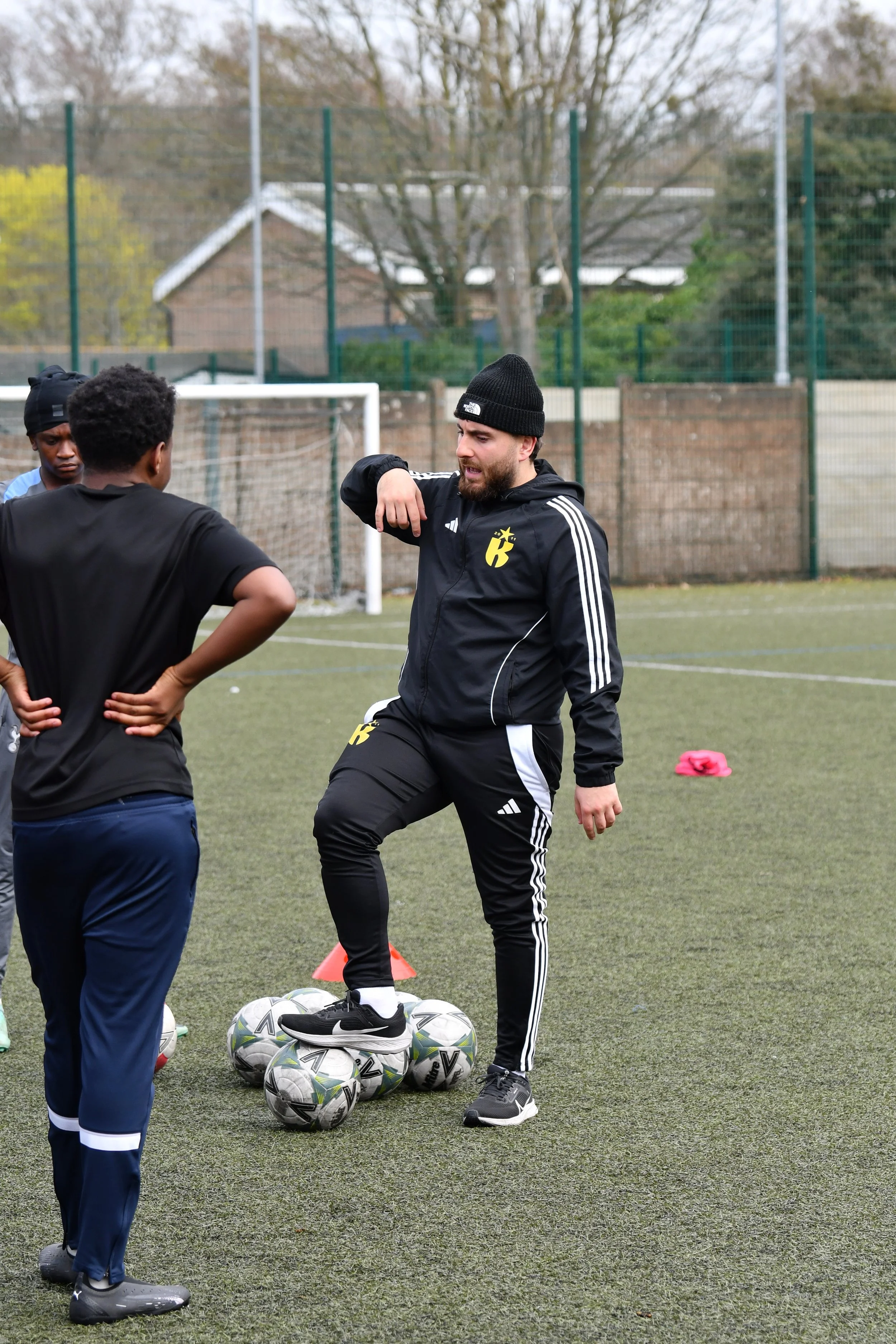
“Football is often the thing that brings young people through the door, but the relationships we build with them are what can make the biggest difference. As coaches and SLOs, we’re in a really fortunate position where young people can see us as someone they can talk to, trust and turn to, whether that’s about football, education or things going on in their personal lives. Sometimes simply having a trusted adult who listens without judgement can have a huge impact.”
Nick Pavlou, Kinetic Academy Coach
‘‘Having nick at my school is more to me than just having a coach I can speak to about football but someone who I can go to when lessons, football or just normal day to day life isn’t going my way.’’
Kinetic Academy Student
As Kinetic combines football and education, our staff can see a much fuller picture of a young person’s journey. A change in attendance, motivation or behaviour doesn’t have to be viewed separately from what is happening at training, school or their wider lives.
The aim isn’t for an SLO to solve every problem a young person faces. It's to ensure young people have someone around them who knows them, can listen and offer guidance and the right support when they need it.
THE ROLE OF TRUSTED ADULTS IN NEET PREVENTION
Falling into the “not in education, employment or training (NEET)” category upon graduation doesn’t occur overnight. Changes in attendance, motivation, or uncertainty about the future can gradually lead to disengagement.

Having a trusted adult can help identify these changes early. There is an opportunity to connect with the young person before they become disconnected from education or future opportunities.
Football may provide the initial engagement, but the aim goes much further. 97% of Kinetic graduates progress into employment, training or university, demonstrating the impact of that consistent support, positive relationships and access to opportunities can have.
This is particularly important when it comes to preventing disengagement. The above outcomes place Kinetic students at 76% less likely to be NEET than the London average. This amplifies the impact of an approach that combines football with education, mentoring and trusted relationships.
YOUR FUTURE ON AND OFF THE PITCH

At Kinetic, football is where many of these relationships begin, but the impact can reach far beyond the game. Through consistent support, trusted relationships and opportunities to grow, we aim to help young people build confidence in both who they are now and where they want to go next.
Whether they desire a future in football, further education, or employment, having the right people in their corner can make all the difference. Whatever their next step looks like, our aim is to support our young people’s futures both on and off the pitch.